How to Create the Best Solo Creative Workspace
Introverted children and teens often thrive in a quiet, predictable space where they can express themselves without interruption. Introverted children recharge through solitude, which allows for deep focus and reflection. A solo art workspace can become a calming place where they can unwind after school, process emotions, and explore their imagination at their own pace.
Choosing the right location is crucial. A small, cozy corner tends to make introverted children and teens feel more comfortable and offers a sense of safety and consistency. Ideal spaces in the home include a corner of their bedroom, a hallway nook, or even a converted bonus room. The goal is to create a personal space that feels quiet, contained, and predictable.

An environment with limited stimulation supports introverted children’s natural tendencies toward deep thinking and sensory sensitivity. Soft lighting and neutral colors help create a soothing, low-stimulation atmosphere that doesn’t make children feel overwhelmed. Many introverted children also benefit from having noise‑canceling headphones or gentle lo-fi music available, as sound sensitivity is common among introverts.
An organized and clutter-free space plays a major role in helping introverted children feel calm and in control. Clear bins, simple labels, and a small selection of curated supplies can reduce the likelihood of being overwhelmed and support independence. Experts believe that too many choices can increase anxiety in introverted people. A “grab tray” with just a few supplies can be especially helpful on days when decision‑making feels hard for an introverted child or teen.

When selecting furniture, simplicity is best. There is no need to buy a room full of furniture. A small desk or table, a comfortable chair, and a shelf or rolling cart for supplies are usually enough. Optional decor touches, such as a soft rug, a small plant, or a corkboard for displaying artwork, can make the space feel personal. Remember, it is important to follow your child’s lead on how much visual stimulation they prefer in their work area.

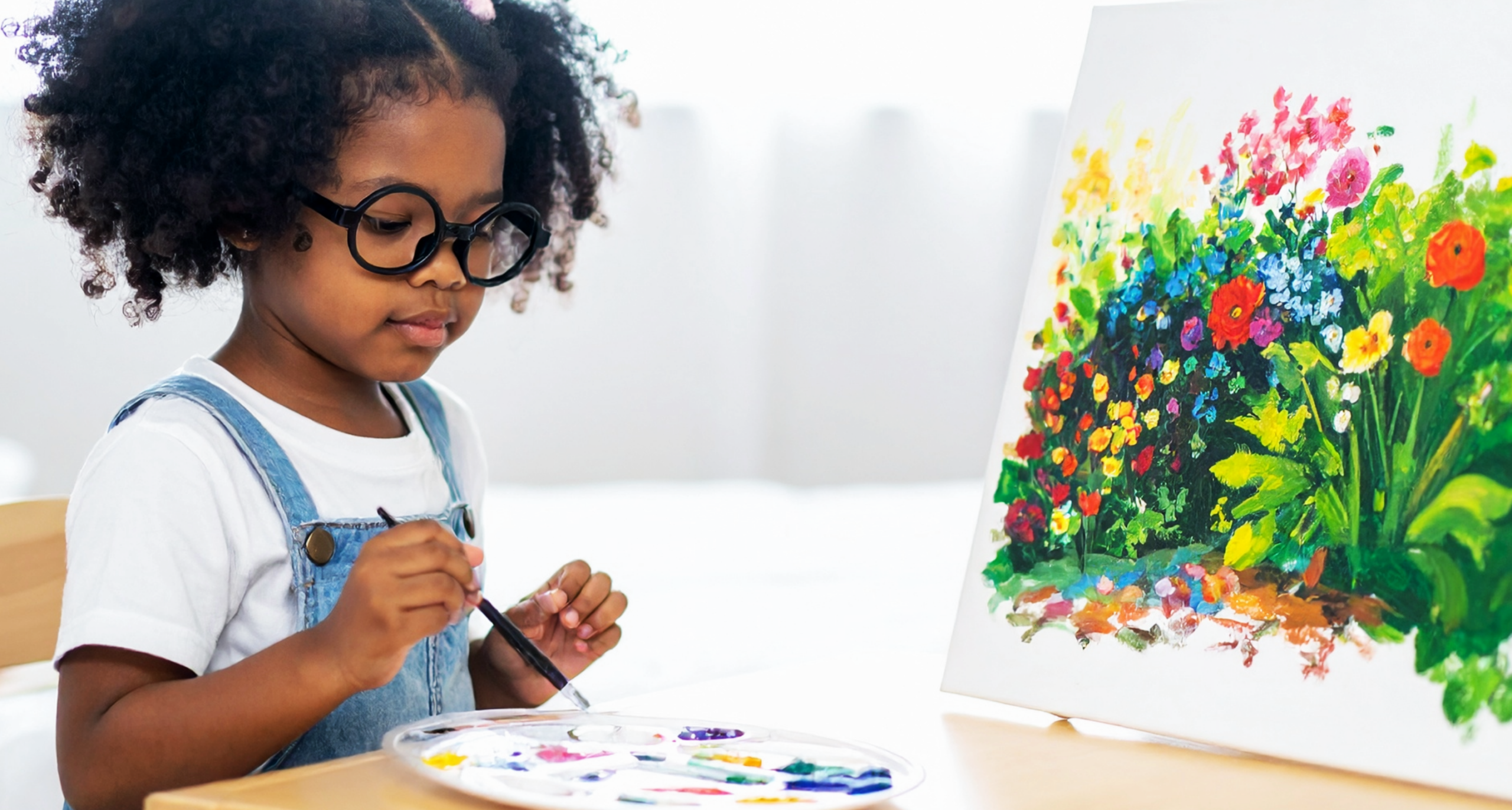
A low‑stimulation creative workspace doesn’t require elaborate materials. Introverted children often gravitate toward quiet, tactile, or minimal-mess supplies such as sketchbooks, colored pencils, watercolors, modeling clay, washi tape, and origami paper. These supplies aid creativity without overwhelming the senses.
To help your child or teen get started, here are some calming, open‑ended creative ideas:
For children (ages 5–12):
- Drawing dream worlds or imaginary maps
- Watercolor resist art
- Nature sketching
- Origami animals
- Paper weaving or DIY bookmarks
- Mini clay creatures or pinch pots
- Gentle prompts like “Draw something peaceful” or “Design a secret symbol”
For teens (ages 13–18):
- Character design or graphic novel panels
- Realistic pencil portraits or minimalist line art
- Watercolor landscapes or abstract mood paintings
- Digital art, mood boards, or digital collages
- Embroidery, zines, jewelry making, or custom stickers
- Reflective prompts like “Illustrate a moment you want to remember” or “Create art inspired by a favorite song”
Supporting your introverted child’s creative interests means giving them space while still showing interest. Gentle check‑ins, offering materials without directing the process, and celebrating effort rather than perfection all help build confidence. It’s equally important to avoid hovering, critiquing technique, or pressuring them to share their work if they’re not ready.